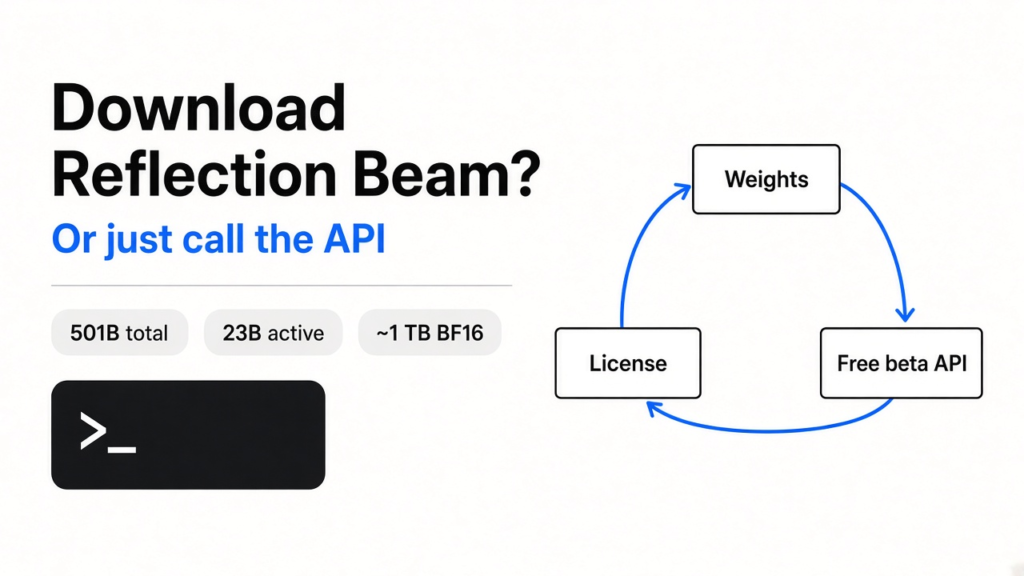
Reflection put a 501-billion-parameter model on Hugging Face today and called the license Apache 2.0. The “23 billion” in the headline is the slice that does the math. It is not the size of the download.
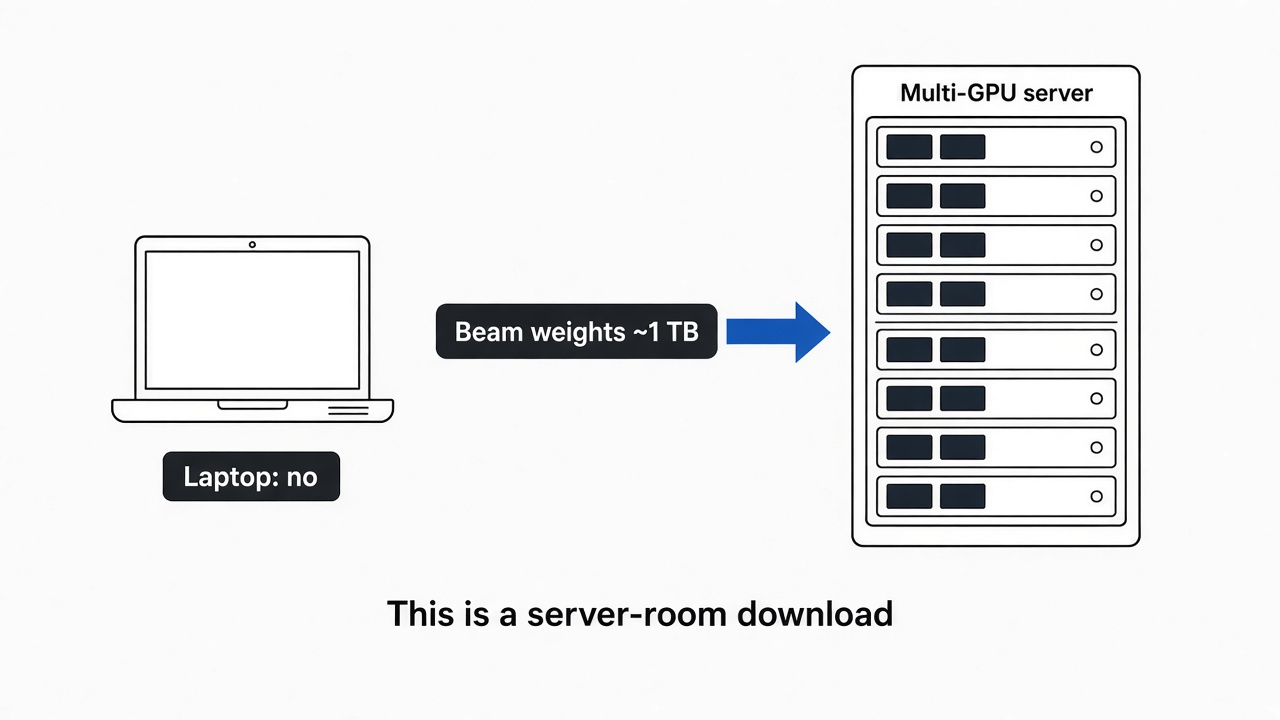
Short answer: Do not download Reflection Beam onto a laptop, a mini PC, or one desktop. The full-size weights alone are about 1.0 TB. Call the free public beta at platform.reflection.ai if you want to know whether it does your job. Download it only if you already have a multi-GPU server and you specifically need a file you can keep, change, and ship without Meta’s revenue clause. Beam is text only. It will not look at a screenshot.
Yesterday’s post was about a different file. Muse Spark Open is larger, multimodal, and not Apache. If that is the model you meant, stop here and read Can I run Muse Spark Open at home? The rest of this page is Beam only.
The thread to hold on to: a public weight file is a download. A license is the permission. A benchmark is someone else’s test until you rerun it.
What actually shipped on 16 October?
The weights. Not a waitlist, and not a new chat app.
Start from the file, because the file is the thing you can or cannot have.
A model is a giant list of numbers learned during training. One of those numbers is a weight (a stored knob the model uses to turn the previous text into the next chunk). Open-weight means those numbers are public for download. It does not mean the training code is public, and it does not mean open source (a label people use for software you may use, change, and share). The permission to do those things lives in a separate document, the license. We get to that document later. Do not collapse the three words into one.
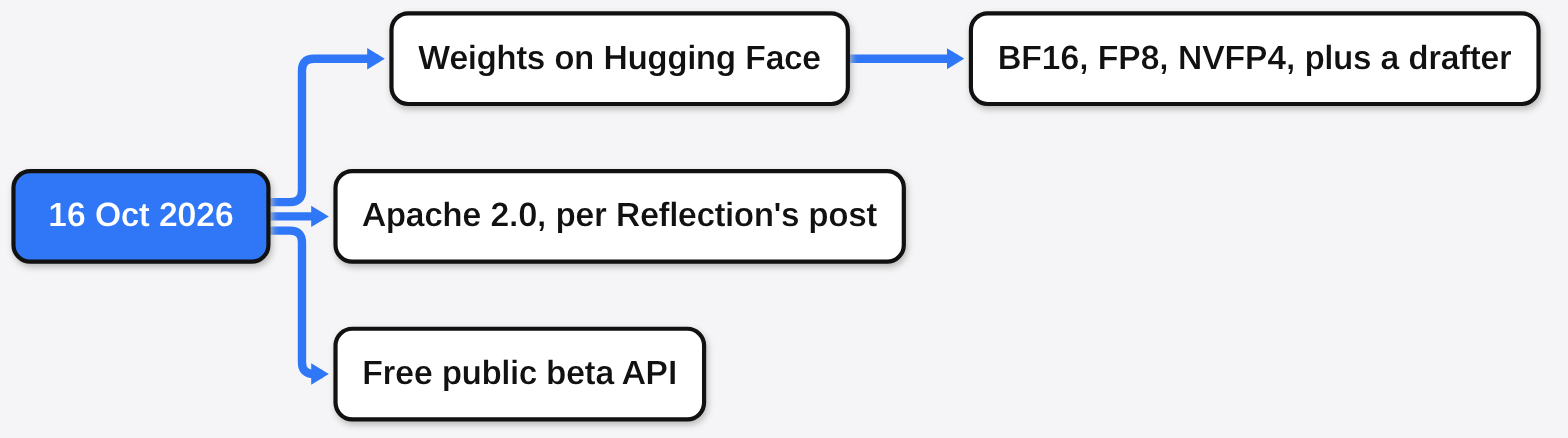
Reflection’s launch post, dated 16 October 2026, says three things happened today:
- The weights are on Hugging Face, in three precisions: BF16, FP8, and NVFP4, plus a small drafter model used for speculative decoding (a trick where a tiny model guesses several next chunks and the big model checks them, so the big model does less work per chunk).
- The license on those weights is Apache 2.0, by Reflection’s account. The Hugging Face listing for all three checkpoints shows apache-2.0 as well. Open the LICENSE file yourself before you ship anything.
- A public beta of their own API (a service you call over the network, instead of running the file yourself) is free to start.
The repo names, as listed on the Hugging Face org page the same day:
reflection/Beam-1.0-501B-A23Breflection/Beam-1.0-501B-A23B-FP8reflection/Beam-1.0-501B-A23B-NVFP4reflection/Beam-1.0-501B-A23B-DFlash2for the drafter
Primary post: Beam is now available. Model card: Beam model card. They also open-sourced Mirror CLI, the terminal harness (the program around the model that reads your repo, calls tools, and asks permission) they trained Beam against. You do not need Mirror to download the weights. Artificial Analysis later scored the coding-agent test inside Mirror, so the name will come back.
What do 501 billion and 23 billion mean?
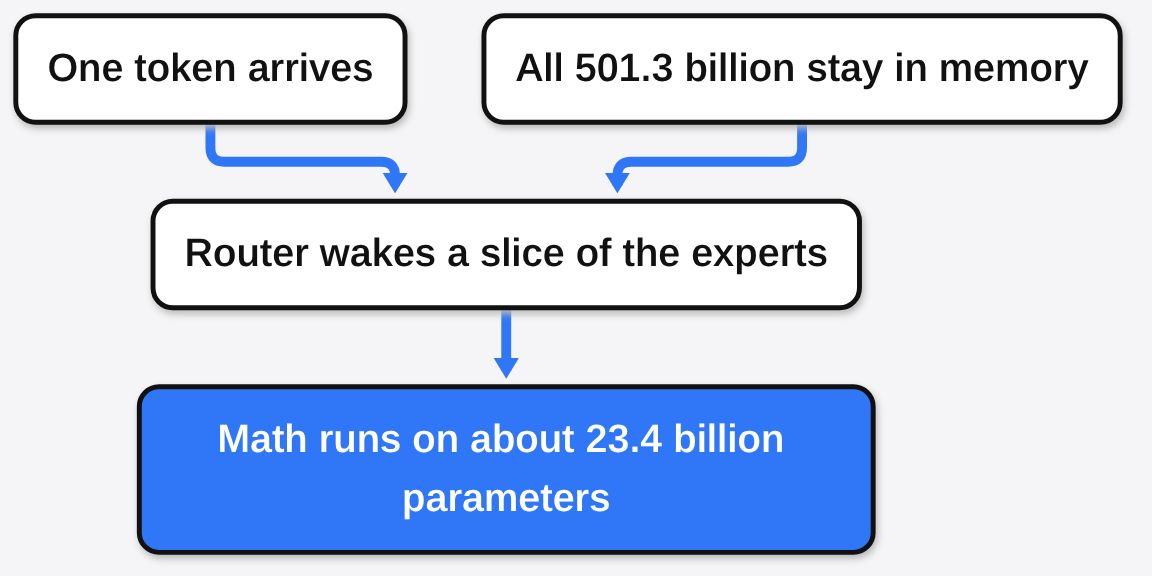
501 billion is how much you must store. 23 billion is how much math runs for one token. They are not two sizes of the same download.
A computer does not read words. It reads tokens (chunks of text, often a piece of a word). Each new token is one step. A parameter (one learned number, one weight) is a knob used during that step.
A dense model (the ordinary kind) uses every knob on every token. Beam is not that. It is a sparse mixture of experts. Before the name: imagine a library of specialists, plus one clerk. The clerk sees the token and wakes a few specialists. The others sit idle for that token. They are still on the machine. That clerk is the router (the small decider). The specialists are the experts. Sparse means most of them sleep on any one step. Mixture of experts is the whole arrangement.
The model card’s counts, read on 16 October:
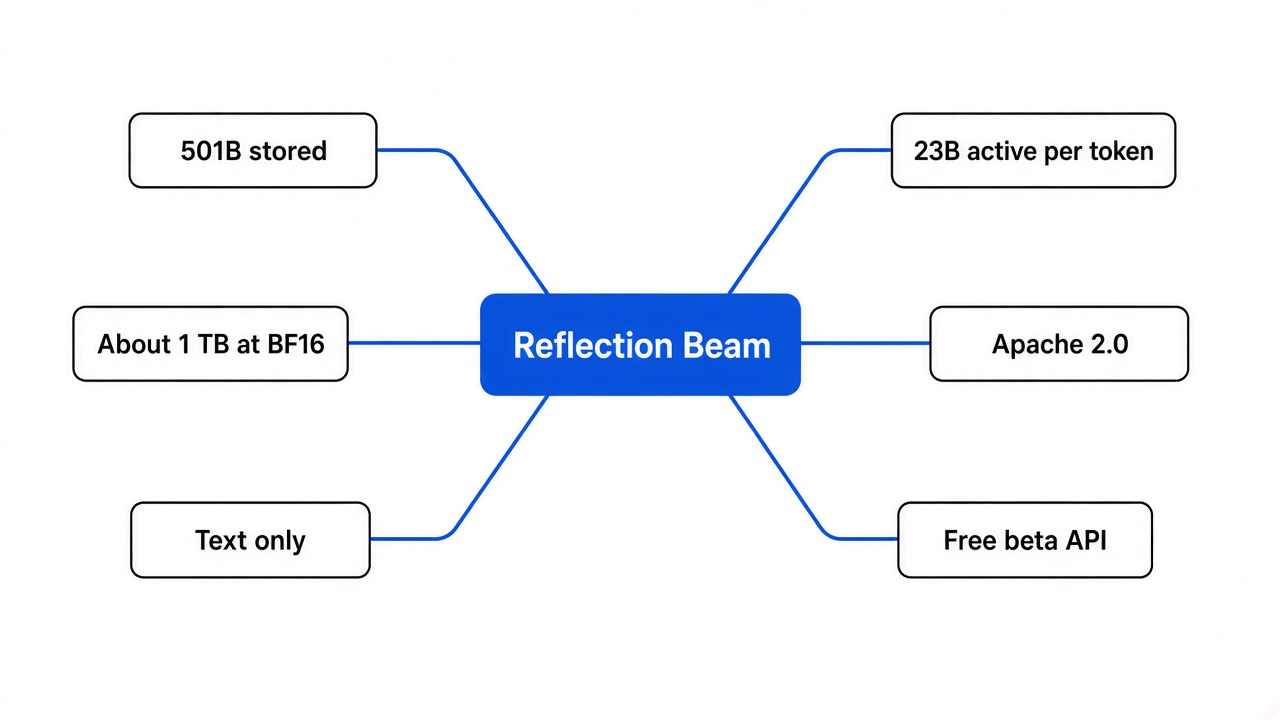
- 501.3 billion parameters in total
- 23.4 billion active on each token
- 52 layers (stacked blocks the token passes through): 3 dense layers, which have no specialist menu, and 49 mixture-of-experts layers
- 256 experts
- a context window (how much text it can look at in one go) of 1 million tokens
- text in, text out
23.4 divided by 501.3 is about 4.7 percent. That is the card’s active share. It is not “one expert out of 256,” because shared parts of the network stay on every time. The card lists 256 experts. It does not say how many of those 256 wake up per token. Do not paste Muse Spark Open’s “8 of 256” onto Beam. Different model.
The speed story is the 4.7 percent. The memory story is the other 95 percent, which still has to sit in fast memory. A library does not get smaller because you only open a few books.
One limit, before the scores. Beam is text only. The October 5 introduction says so, and nothing in the launch post adds eyes. A screenshot, a diagram, or a video is not an input. Muse Spark Open can look. Beam cannot. If your job starts with a picture, this is the wrong file.
Why is the pitch about tokens, not about a cheaper token?
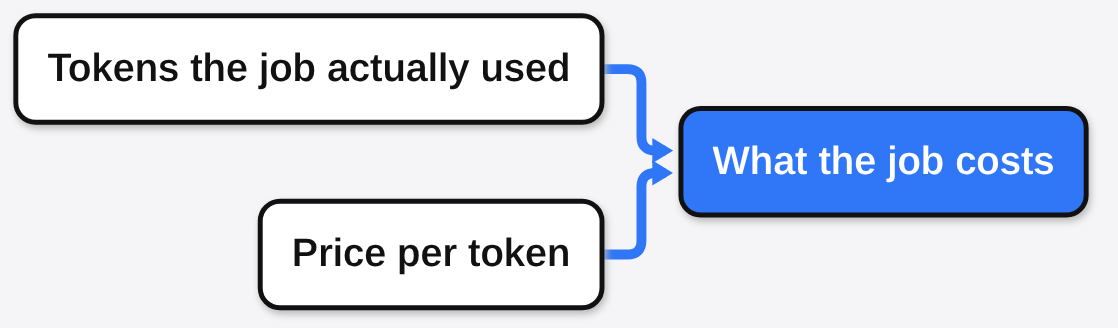
The bill for a finished job is the number of tokens times the price of one token. A pricey token can still be the cheap job.
Reflection is not selling Beam as the smartest open model. The October 5 post says it reaches scores comparable to GLM-5.2 on advanced reasoning while using 3 to 4 times less inference compute (the work of actually answering, as distinct from the work of training). VentureBeat, on 16 October, calls that compute figure an estimate, not a measurement, and notes that it leaves out the cost of reading the prompt. A long prompt is normal in coding and agent jobs. Treat “3 to 4 times” as the company’s estimate, with that hole in it.
The training idea, from first principles, is small. Reinforcement learning (practice: try a task, get a score, nudge the model toward tries that scored well) was pointed at two targets at once. Finish the task. And do not ramble. Ioannis Antonoglou, Reflection’s co-founder and CTO, told VentureBeat: “You don’t give up anything. You just penalize it in terms of how many tokens it can use.” He also said that with enough of that practice, a model learns to solve the task and stay brief at the same time. Joe Spisak, VP of Product, said private-preview developers saw “almost like 3x more efficient reasoning.” That second line is an anecdote. It is not a table.
The arithmetic does not need their prices, and Beam does not have a public price yet. The beta is free. This box is an illustration, not a quote:
| Illustration, not a real price | Price per million tokens | Tokens to finish | Cost of the job |
|---|---|---|---|
| Model A, cheap token, long answer | $1 | 80,000 | $0.08 |
| Model B, costly token, short answer | $2 | 25,000 | $0.05 |
Model B costs twice as much per token and less per finished job. That is the whole pitch. If a host later prices Beam above a rival per token, redo this multiplication with the real numbers before you switch. Do not switch because the launch post said “efficient.”
The independent version of the same idea is below, in Artificial Analysis’s token counts. Use those in an argument. Use the illustration only to see the shape.
What do the scores say, once you split them?
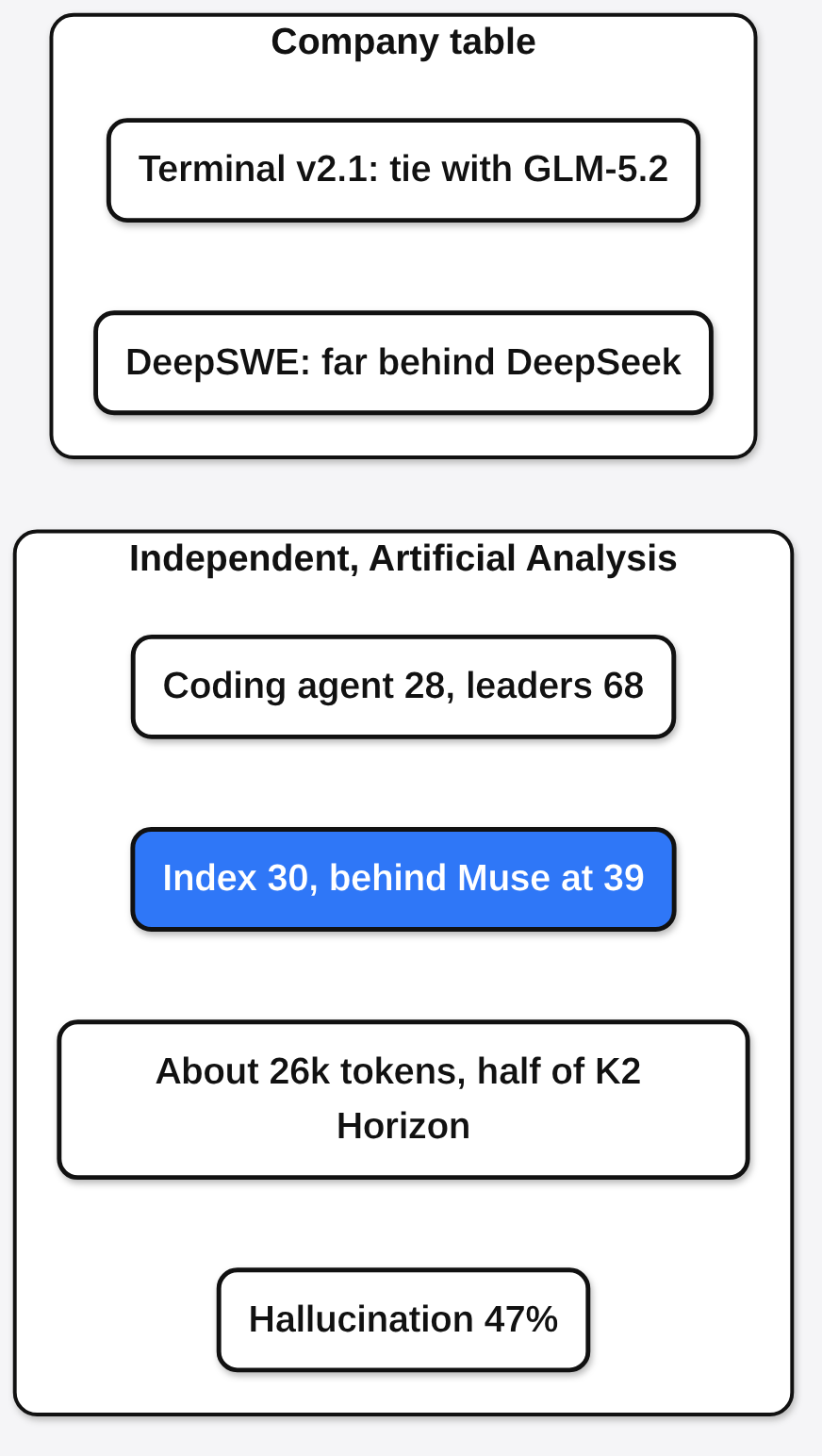
Independent tests put Beam second among US open models this week, and well off the open-model lead. Reflection’s own coding table is a tie with GLM-5.2 on one row and a loss to DeepSeek on another. Do not average them.
Two labs, two jobs. Keep them apart.
Artificial Analysis, 16 October 2026. They scored the released model. Their Intelligence Index (one blended number across several tests) is 30.
- Second among US open-weight models that day, behind Muse Spark Open at 39, ahead of NVIDIA’s Nemotron 3.5 Super VL at 26.
- Tenth among all open-weight models. The UAE’s K2 Horizon is at 31, one point ahead. A point is a tie, not a ranking to bet a migration on.
- About 26,000 output tokens per index task, of which about 19,000 are reasoning and about 7,000 are the answer. K2 Horizon, one point higher, uses about 52,000. Twice the tokens, one point. That is the efficiency claim with a lab that does not work for Reflection.
- GPT-6 Astra (max), a closed model, scores 53 at about 27,000 tokens. Same token budget, a much higher score. Open and efficient is not the frontier.
- Only 26 percent of Beam’s output is the final answer, the 28th-lowest share of 219 models on their index version 4.3. Short final answers, long scratchpads. “Fewer tokens” here does not mean a one-line reply.
- Cyber Index: 34 percent of tasks, the leading US open-weight model they had tested.
- Coding Agent Index, running inside Mirror: 28. Claude Code with Qwen3.8 Max scores 43. The leaders score 68. Beam is frugal on that test. Only two Codex setups used fewer tokens. Frugal and behind are both true.
- AA-Omniscience: it answers 33 percent of questions correctly, ahead of K2 Horizon at 18 percent and Qwen3.8 27B at 16 percent. Its hallucination rate is 47 percent, against 26 percent and 30 percent for those two. A hallucination (a specific claim that is not true, written in the same tone as a true one) is the failure mode. A model does not look a fact up. It continues text. Beam continues with more right answers and more invented ones. The net score they publish is still ahead of those two peers. Knowing more did not come with guessing less.
One number that will get stripped of its context: Terminal-Bench 4.0, where Beam scores 3.0 percent, Muse Spark Open 8.1 percent, and Qwen3.8 27B 5.6 percent. Everyone is low. That is a different test from Terminal-Bench v2.1, where Reflection’s own card says 80.1 percent. Do not quote 80 percent as “it can use a terminal” and hide the 4.0 line. Do not quote 3 percent as “it cannot” without the peer scores. Name the version every time.
Reflection’s model card, their measurement, BF16, temperature 0.7, top-p 0.99. Rival numbers below are from Reflection’s October 5 comparison, not from those labs’ own posts. A preview score and a launch score are not a controlled rematch.
| Test | Beam, card, 16 Oct | What Reflection printed for a rival on 5 Oct | How to read it |
|---|---|---|---|
| Terminal-Bench v2.1 | 80.1% | GLM-5.2 81.0%. DeepSeek V4.1 Flash 90.6%. Kimi K3 88.3% | A tie with the model they say they match. A loss to DeepSeek and Kimi. |
| DeepSWE v1.1 | 43.3% | GLM-5.2 44.0%. DeepSeek V4.1 Flash 74.2% | Same shape. Level with GLM-5.2. Far behind DeepSeek. |
| SWE-bench Verified | 81.6% | Nemotron 3 Ultra 70.7% on the October 5 table | Company number. No independent reprint yet. |
| SWE-bench Multilingual | 78.3% | Company number only | No rival cell we will stand behind. |
| SWE-bench Pro v1 | 66.1% | Company number only | No rival cell we will stand behind. |
FP8 and NVFP4 on the same card sit within a point or two of BF16 on these rows. Compression did not fall off a cliff in Reflection’s own table. That is not the same as saying your task will match.
How big is the download, in bytes?
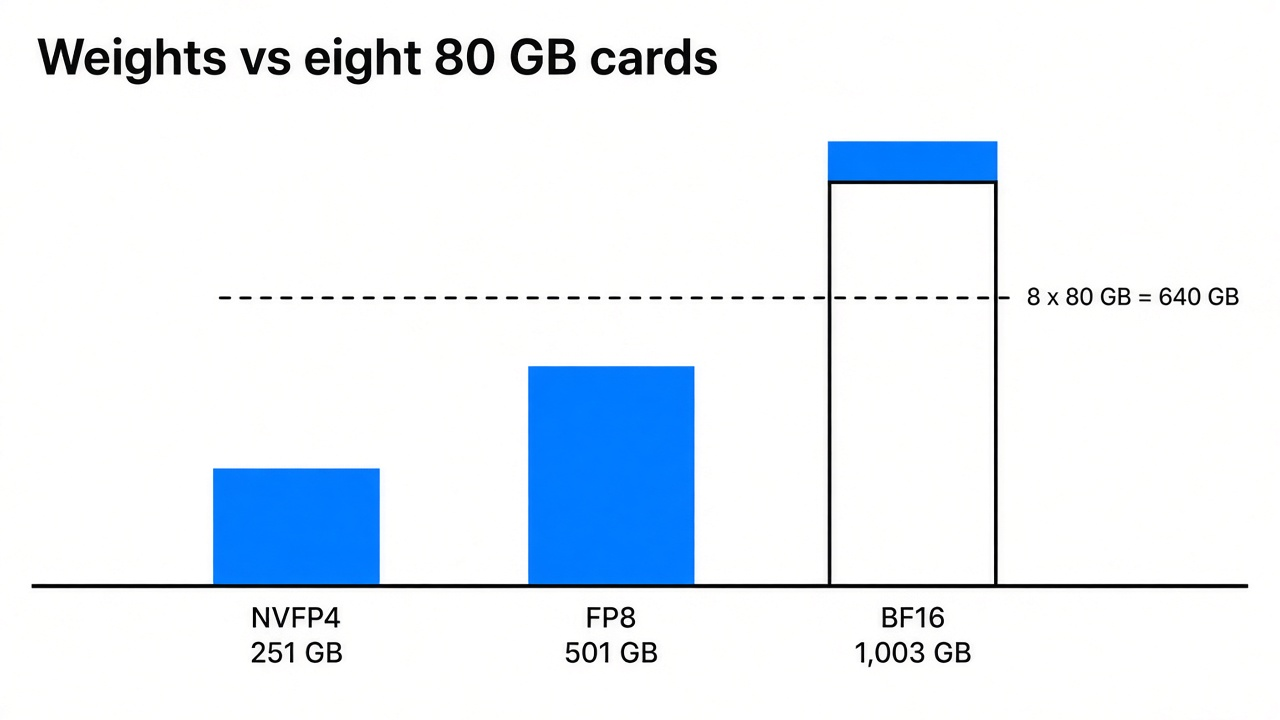
About 1.0 TB at full size, about 501 GB at 8-bit, about 251 GB at 4-bit. That is the weights alone. A running model needs more.
Go back to the knob. You store every knob, including the ones that sleep. The memory bill is the knob count times the bytes you spend on each knob.
Quantization (storing each knob with fewer bits, trading a little accuracy for a lot of space) is the only reason the smaller files exist. BF16 is a 16-bit number, 2 bytes. FP8 is an 8-bit number, 1 byte. NVFP4 is a 4-bit number, half a byte. The card’s own table is why a small accuracy trade is plausible. It is not a promise.
The arithmetic, from the card’s 501.3 billion parameters:
| Checkpoint | Bytes per parameter | Weights alone |
|---|---|---|
| BF16, full size | 2 | about 1,003 GB, about 1.0 TB |
| FP8 | 1 | about 501 GB |
| NVFP4 | 0.5 | about 251 GB |
A single NVIDIA H100 PCIe card holds 80 GB. Eight of them hold 640 GB.
- The 4-bit weights, about 251 GB, fit on that pile with room to spare.
- The 8-bit weights, about 501 GB, fit as a file, with roughly 140 GB left before the notepad and the runtime.
- The full-size weights, about 1,003 GB, do not fit on eight 80 GB cards.
VentureBeat reports that the 8-bit and 4-bit checkpoints are meant to be served on an eight-GPU server of H100, H200, or GB300 chips, and that full precision wants more. An H200 holds more than 80 GB, so “eight GPUs” is not one number. Do the multiplication for the cards you actually have. Fitting the file is not the same as a fast answer. There is no trustworthy public tokens-per-second figure yet. Anyone who prints one without naming the chip, the precision, and the engine is guessing.
The notepad is extra. While the model writes, it keeps notes on earlier tokens so it does not reread them from scratch. Those notes are the KV cache (a pair of values per token, per layer). They grow with the conversation. “23 billion active” does not shrink them. A 1 million token window is a ceiling, not a free notebook. You will not fill it for fun. A long agent job might. Add that on top of the weights before you declare that eight cards are enough.

What does Apache 2.0 change, that Muse did not?
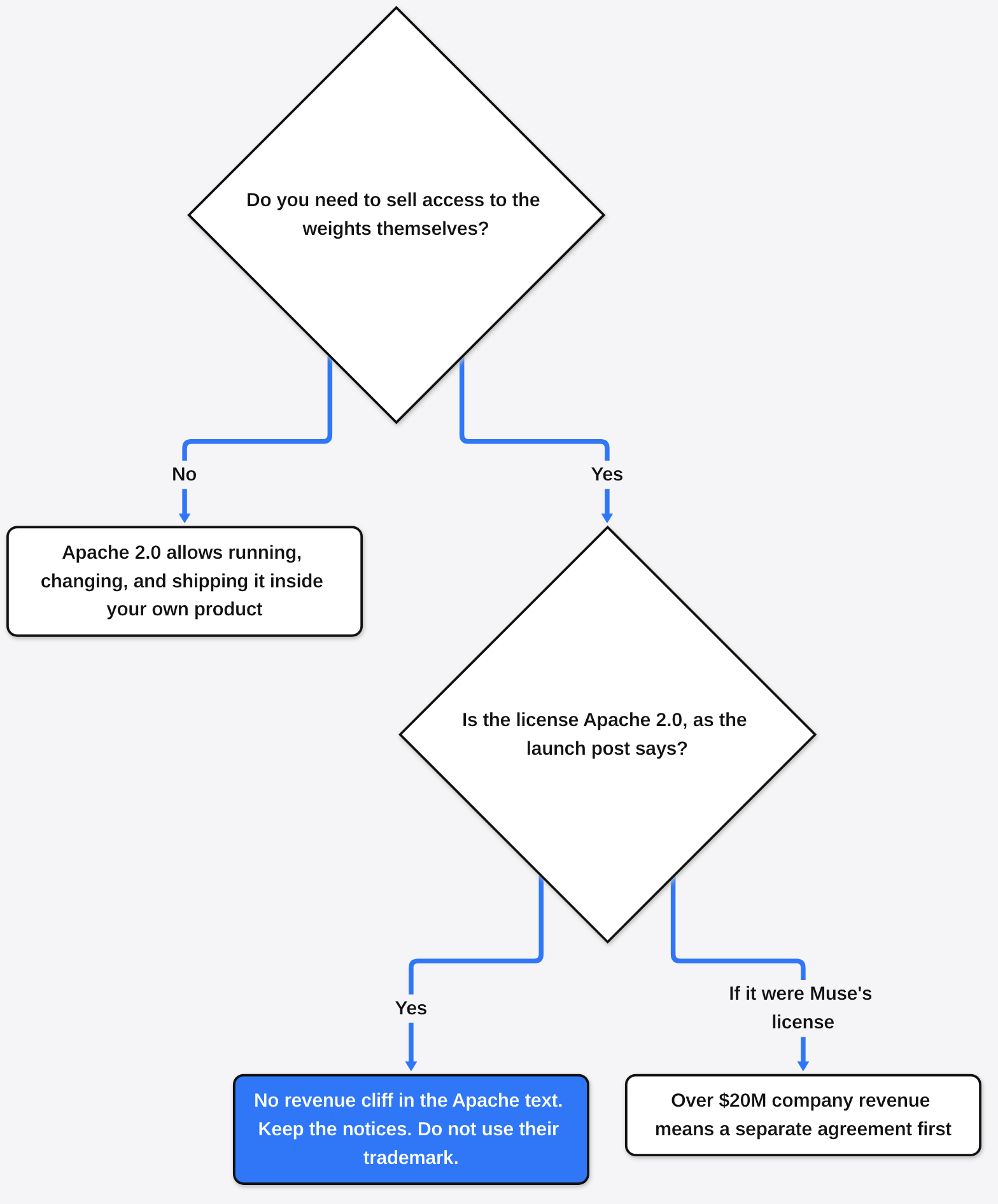
You may use, change, and ship the weights, including in a product you sell. There is no $20 million cliff in the Apache text. There is also no right to Reflection’s name.
A download is not a permission. The license (the legal note that says what you may do with the file) is the permission. Apache 2.0 is a specific, old, widely used permission slip. Reflection’s launch post says the weights use it. Confirm the file on the repo. The usual Apache 2.0 terms, which you should still read in full:
- You may use the work commercially, modify it, and distribute it.
- You must keep the license text and the notices.
- Contributors grant a patent license tied to the work. That grant ends if you sue them claiming the work itself infringes a patent.
- You do not get a trademark license. Shipping Beam does not let you imply that Reflection built or endorses your product.
- There is no warranty.
- There is no revenue threshold, and no required line of the form “Built with Beam.”
The model card also says Reflection does not prohibit distillation (training another model on this model’s answers), fine-tuning, quantization, merging, or good-faith security research on systems you are allowed to test. Apache already points that way. The sentence matters because other labs have tried to take those acts off the table.
Yesterday’s Muse Spark Open license is the contrast, from the license text quoted in that post. Two lines there do not exist in Apache 2.0:
- The product interface has to show “Built with Muse Spark Open.”
- If you sell access to the model itself, and company revenue is over $20 million in any rolling 12 months, you need a separate agreement with Meta first.
So the decision is narrow. If you wanted Muse’s score, or eyes, Beam is the wrong file even though the license is freer. If you wanted to fine-tune, self-host, or sell access without a revenue conversation with the lab, Beam is the file to read, and Muse is the one with the extra contract. “More open” and “more capable” came apart this week. Pick the word you actually meant.
Which path should you take?
Match the path to the freedom you need and the memory you have. Do not match it to the parameter count.
| Your situation | What to do |
|---|---|
| You want to know if it does your job | Use the free beta API. Do not start by moving a terabyte. |
| A laptop, one desktop, or a Mac without a room full of memory | Do not download it. The 4-bit file alone is about 251 GB, before the runtime. |
| You need it to look at images, video, or audio | Wrong model. Beam is text only. Muse Spark Open can look, and answers in text. |
| You have an eight-GPU server around 80 GB per card | Start with NVFP4 or FP8, not BF16. BF16 does not fit that pile. Confirm the engine: Reflection names vLLM, SGLang, Hugging Face Transformers, and others. |
| You will fine-tune or sell access, and Muse’s $20M clause was the blocker | Read the LICENSE file. If it is Apache 2.0, that clause is not in it. Then look at the scores again. Freedom does not raise a 30 to a 39. |
| You need the top US open-weight score this week | That was Muse Spark Open, at 39, not Beam at 30. Different license, different memory bill. |
| The job cannot tolerate invented details | Artificial Analysis measured a 47% hallucination rate. Do not point it at unchecked facts. Check the answer, or use a tool that looks the fact up. |
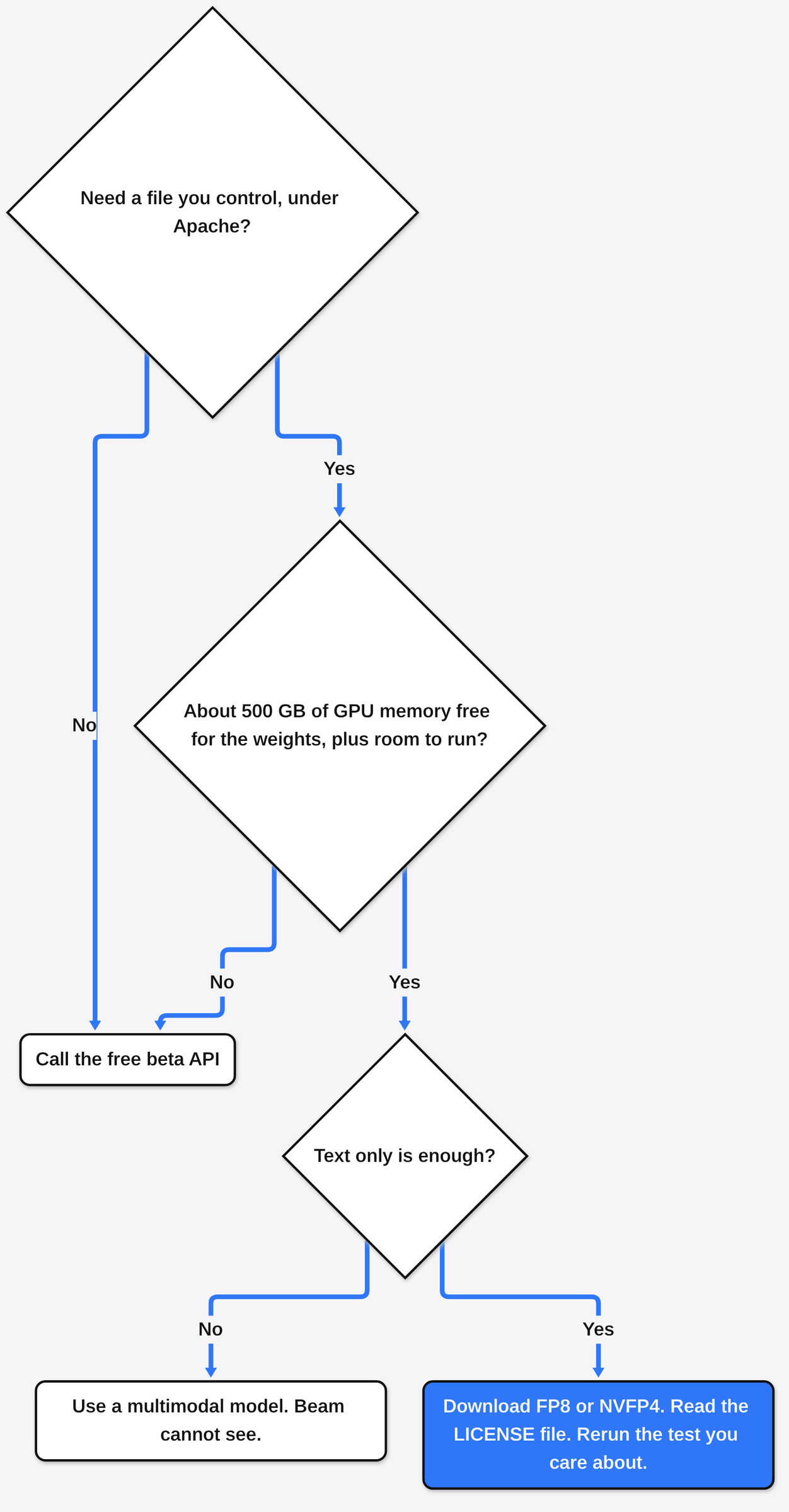
So, should you download Reflection Beam? Only if you already have the server, you have read the license file rather than the headline, and a text model that is token-thrifty and second among US open models is actually the tool you wanted. Everyone else should call the API, then decide with a bill in front of them. The weights being real, today, is the news. The weights fitting on your machine is a different question, and for almost everyone the answer is no.
Common questions about Reflection Beam
Is Beam open source?
Reflection says the weights are under Apache 2.0, which is an open-source license, and that the harness and the deployment tooling are open too. The training code and the training set are not the thing they released today. Call the weights open-weight under Apache, and check the LICENSE file before you repeat the sentence in a product.
Does “23 billion active” mean it fits in about 46 GB?
No. Active is the math for one token. You still store about 501.3 billion parameters. At 2 bytes each, that is about 1.0 TB of weights before any notepad.
Is it better than Muse Spark Open?
On Artificial Analysis’s index, no. Muse is at 39, Beam at 30. Beam uses fewer tokens than a peer that scores one point higher, and its license does not have Muse’s revenue clause. Better depends on whether you are buying the score, the token bill, or the permission.
Can it read a screenshot?
No. Text in, text out.
Why do some posts say 80 percent in the terminal and others say 3 percent?
They are different tests. Reflection’s card reports Terminal-Bench v2.1 at 80.1 percent. Artificial Analysis reports Terminal-Bench 4.0 at 3.0 percent, with other strong models also in the single digits on that version. Quote the version.